VERNI GASTECH
Industrial & Medical Gas Solutions
Industrial & Medical Gas Solutions
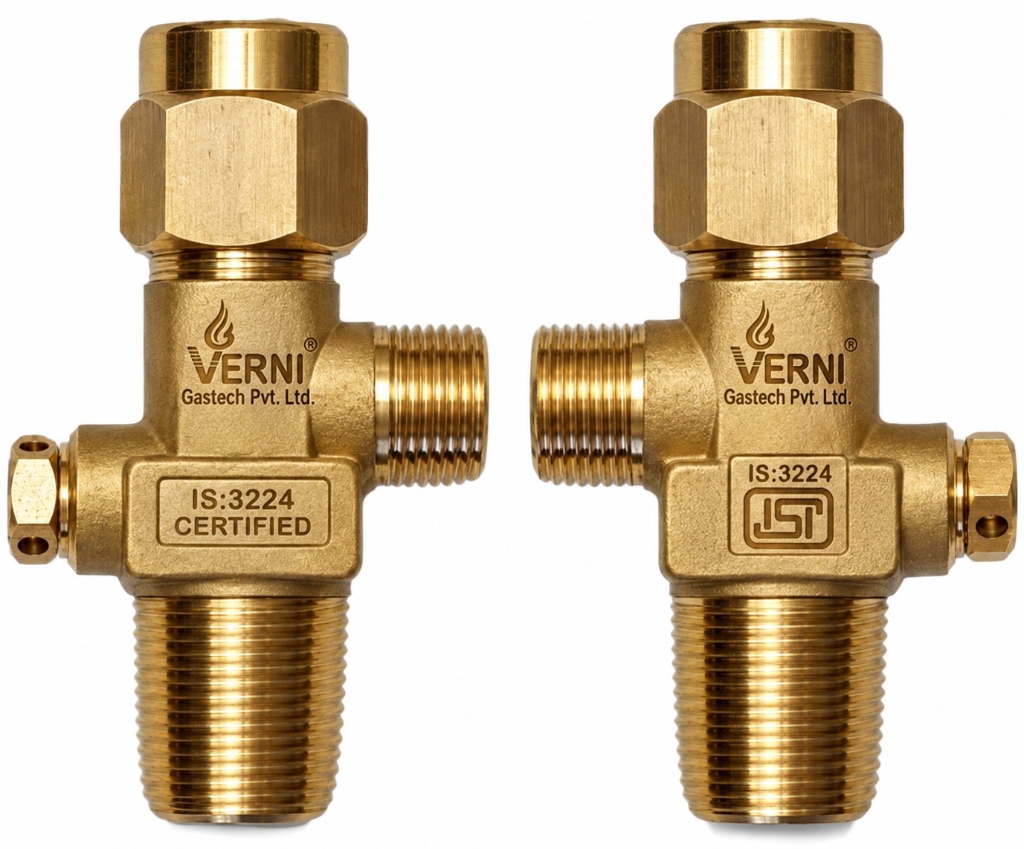
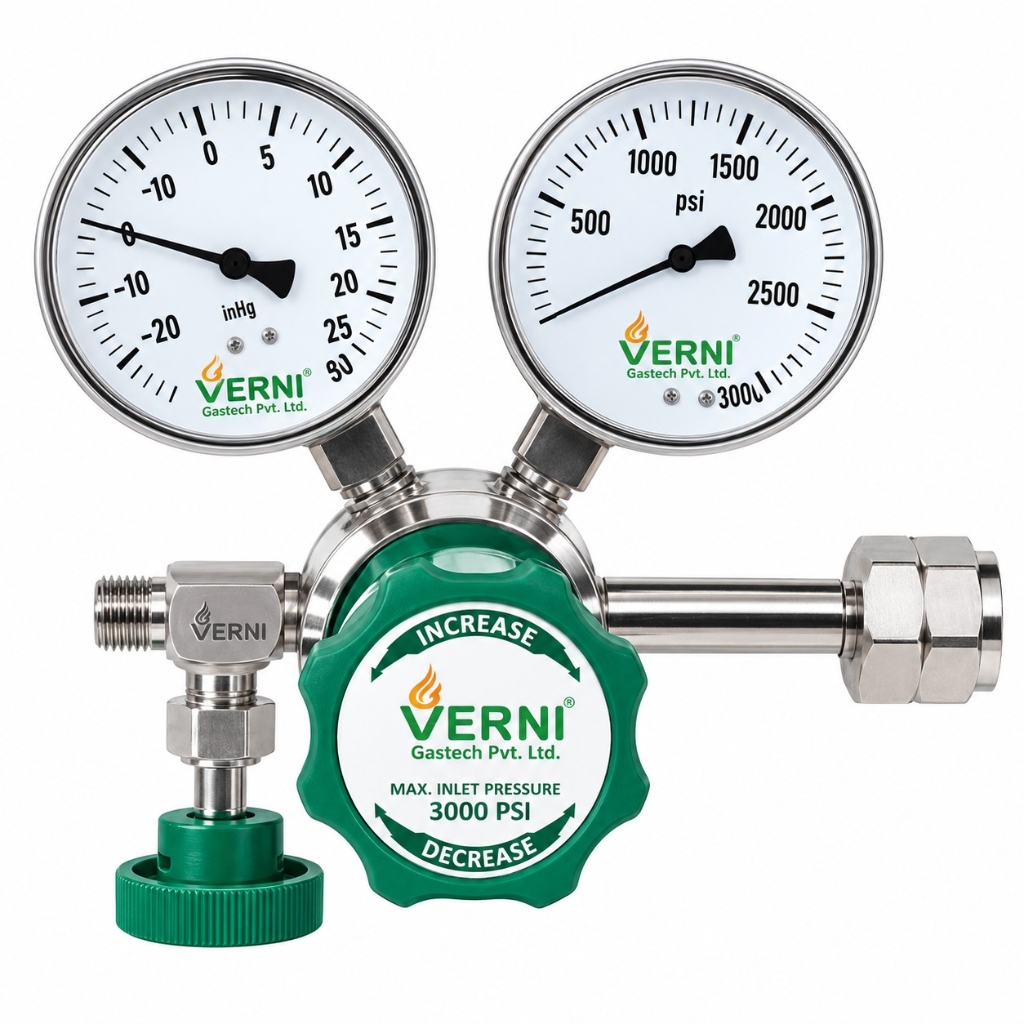
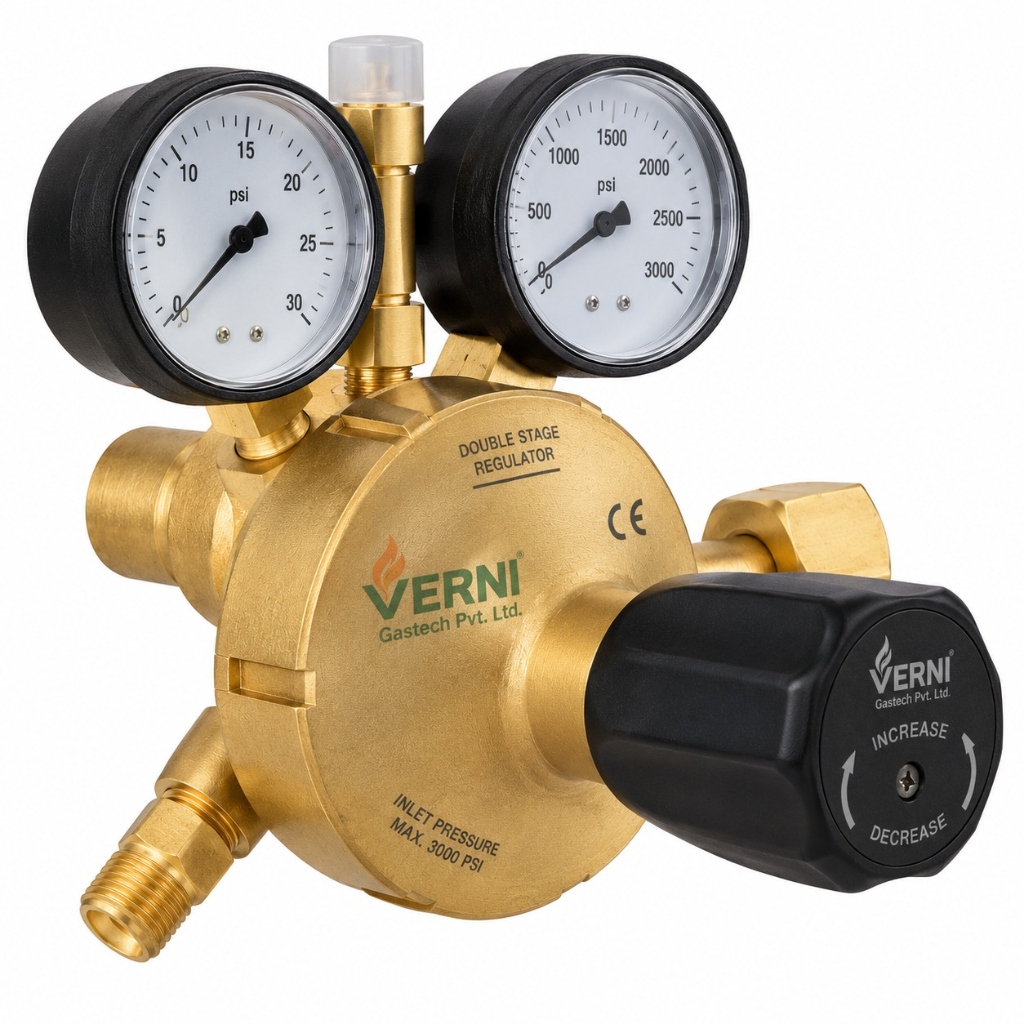
There are various types of valves available based upon their inlet and outlet thread size, gas type, working pressure & operational procedures.
These valves are made as per Indian Standard IS: 3224 and are approved by PESO and BIS.
Pressure management of Industrial gases is both vital for safe working & essential because of high static pressure that are employed to store gases in cylinders for transport.
Pressure regulators for high pressure cylinders are often referred to as Single Stage Regulators as they take the 200-400 BAR static pressure & reduce it to a safer and more manageable level which could be between 5-50 BAR.
Double Stage Regulators or Intermediate Pressure Regulators take the reduced pressure from the Single Stage up to 50 BAR and regulate down to desired working pressure anything between 1.5 and 50 BAR.
Explore composition, functional engineering, valve types, safety features, and industrial applications.
IS:3224 Certified, PESO & BIS Approved Cylinder Valves
Industrial gas cylinder valves are precision-engineered devices made from robust materials such as brass, stainless steel, or other corrosion-resistant metals to withstand high pressure and prevent leaks.
Many valves are equipped with safety features such as pressure relief devices, burst disks, and check valves to ensure safe operation under high pressure.
Basic on/off valves for controlling gas flow reliably.
These maintain a small positive pressure inside the cylinder to prevent back-contamination and moisture ingress.
Integrated with pressure regulators to provide precise, all-in-one control over gas flow and pressure directly at the outlet.
Used in various industries, including welding, metal fabrication, and chemical production, to control the release of gases such as oxygen, acetylene, argon, and nitrogen.
In healthcare, gas cylinder valves are essential for controlling the flow of medical gases like oxygen, nitrous oxide, and anaesthetic gases to patients.
Valves are used in laboratories to precisely control the flow of gases for experiments and analytical instruments.
Used to control gases like CO₂ for carbonation in beverages and in food packaging processes to extend shelf life.
Valves are used in fire suppression systems to release gases like CO₂, halon, and other inert gases to extinguish fires.
Valves ensure safe transportation and storage of compressed gases, preventing leaks and controlling pressure during transit.
Used in environmental applications to control the release of calibration gases for monitoring air and water quality.